

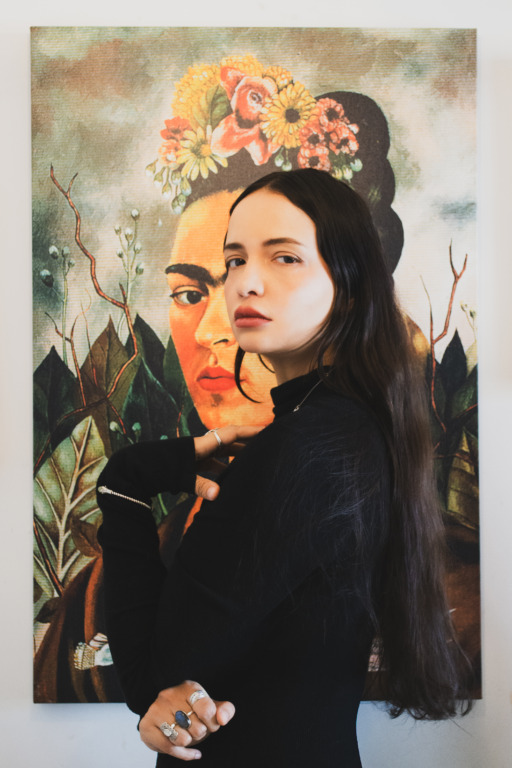
In an era when fashion often seems caught between digital speed and instant spectacle, Renata Buzzo’s work emerged at the 2026 Met as a deeply emotional and necessary statement. Her presence within the exhibition’s Costume Art universe not only confirmed the rise of a powerful Latin American voice on the international stage but also served as a reminder that fashion can still be a space for artistic reflection, vulnerability, and resistance.
Her piece, Corset Anatomia, became one of the most talked-about works of the evening. More than a garment, it felt like a confession transformed into an art object. While much of the industry continues to celebrate aesthetic perfection, Buzzo chose to reveal the opposite: the open body, exposed fragility, and the emotional intensity of the female experience translated into visual language.
The Brazilian designer takes one of fashion history’s most complex symbols of femininity—the corset—and completely reimagines its meaning. A garment originally designed to shape and restrain the female body becomes, in her hands, a structure incapable of containing what lies within. Visible organs, overflowing viscera, and a deliberately exposed anatomy challenge the traditional logic of aesthetic containment.
“It is a body that refuses to remain compressed,” Buzzo explains when describing the concept behind the piece. The statement encapsulates not only the work itself but also the trajectory of her own career. Before arriving at the Metropolitan Museum of Art, the collection to which Corset Anatomia belongs had been removed from São Paulo Fashion Week for being considered “too strong” and insufficiently commercial. Ironically, what made some spaces uncomfortable became precisely what attracted the attention of one of the world’s most prestigious cultural institutions.
And therein lies part of the symbolism that transformed Renata Buzzo’s story into something far more profound than a simple fashion success. She created a work about refusing to shrink oneself in order to fit in, only to find herself living that very experience shortly afterward. In many ways, the piece seemed to anticipate its own destiny.
The public response confirmed that the message resonated deeply, particularly with women. Being labeled “too intense,” “too difficult,” or “too much” remains a familiar experience across many creative industries. Buzzo’s work found its audience precisely through that shared sensitivity: the desire to exist fully without diminishing oneself to gain acceptance.
Within the broader conversation surrounding Latin American fashion, her presence at the MET also marked a significant milestone. Buzzo became the first Brazilian designer selected as the leading visual image of the exhibition for the international press. Moreover, her work entered the museum’s permanent collection, securing a place within one of the world’s most influential cultural institutions. The achievement opens new conversations about how Latin America can occupy central positions within global cultural narratives—not as an exotic or peripheral presence, but as a conceptual protagonist.
Yet perhaps the most fascinating aspect of Renata Buzzo is her understanding of artistic creation itself. Her creative universe extends far beyond fashion. Cinema, literature, performance, and theater coexist naturally within her practice. Currently pursuing postgraduate studies in film, she writes poetry that often serves as the conceptual foundation for her collections and directs much of her own audiovisual work.
Following her experience at the Metropolitan, the designer appears determined to push those boundaries even further. Her next runway presentation may begin with a theatrical monologue before the garments appear, reinforcing her vision of fashion as emotional storytelling and total artistic experience.
The next chapter of her work will likely continue exploring the female experience and the history of women within the arts—women who were silenced, erased, or discredited so that others could occupy their space. It is a theme that aligns perfectly with the emotional depth and critical perspective that define her work.
At a time when fashion can sometimes seem obsessed with empty novelty, Renata Buzzo reminds us of something essential: garments can also carry memory, conflict, and resistance. And sometimes, when a work dares to overflow beyond the limits imposed upon it, it ultimately finds its place in history.